
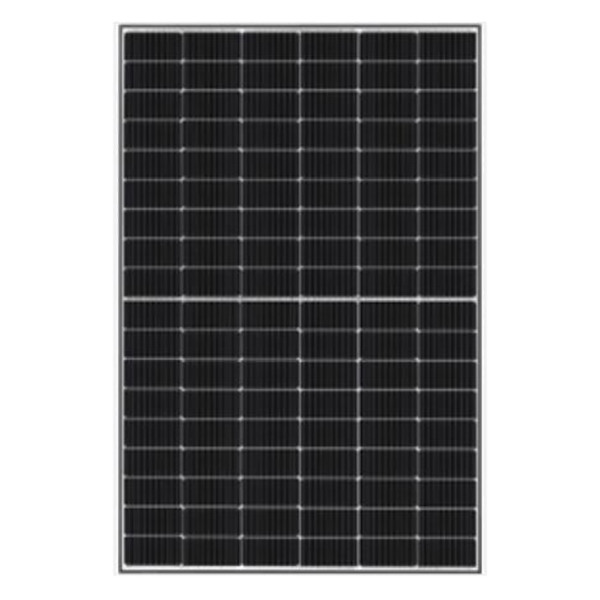
In recent years, the global push towards renewable energy has driven significant advancements in solar technology. Among these innovations, the development and deployment of high-efficiency monocrystalline silicon solar cells stand out as a pivotal breakthrough. These solar cells, designed to harness sunlight and convert it into electrical energy with remarkable efficiency, are proving to be at the forefront of the clean energy revolution.
Solar cells, fundamentally, are semiconductor devices that convert sunlight directly into electricity through the photovoltaic effect. Their importance in the global energy landscape cannot be overstated, as they provide a sustainable, clean, and increasingly cost-competitive alternative to fossil fuels. The latest developments in monocrystalline silicon solar cells, particularly those utilizing both P-type and N-type silicon wafers, are enhancing the efficiency, durability, and scalability of solar power systems.
**The Science Behind P-Type and N-Type Monocrystalline Silicon Solar Cells**
Monocrystalline silicon solar cells are made from a single continuous crystal structure, which provides superior electrical properties compared to polycrystalline counterparts. The terms "P-type" and "N-type" denote the doping process used to modify silicon’s electrical properties. P-type silicon is doped with elements such as boron, giving it an abundance of positive charge carriers (holes), whereas N-type silicon is doped with elements like phosphorus, providing an excess of negative charge carriers (electrons).
Combining P-type and N-type silicon in solar cells can significantly improve charge carrier collection, reduce recombination losses, and enhance overall conversion efficiency. The use of both types also improves solar cell performance under varying environmental conditions, such as low light and high temperatures, which is critical for maximizing energy yield in real-world settings.
**Ronma Group: Driving Innovation in Solar Technology**
Founded in 2018, Ronma Group has rapidly established itself as a national high-tech enterprise, specializing in the research, production, and sales of P-type/N-type monocrystalline silicon solar cells and modules. The company’s commitment to cutting-edge technology and quality manufacturing has positioned Ronma as a key player in the photovoltaic (PV) industry.
Ronma Group’s product portfolio focuses heavily on monocrystalline silicon solar cells, leveraging the advantages of both P-type and N-type wafers to deliver high-performance solar modules. Their modules are designed for a broad range of applications, from residential rooftops and commercial installations to utility-scale photovoltaic power plants.
Beyond manufacturing, Ronma Group is actively involved in the investment, construction, and operation of photovoltaic power plants. This vertically integrated approach allows the company to not only produce high-quality solar cells and modules but also to ensure efficient deployment and operation of solar energy systems. By managing the entire value chain, Ronma Group enhances system reliability, optimizes power output, and accelerates the adoption of solar energy across diverse markets.
**Enhancing Efficiency and Sustainability**
The solar industry’s relentless pursuit of higher efficiency solar cells is driven by the need to reduce the cost per watt of solar power and improve the return on investment for solar projects. Ronma’s advanced P-type/N-type monocrystalline silicon solar cells represent a significant step forward in this regard.
Using innovative cell architectures and precision manufacturing techniques, these solar cells achieve higher power outputs per unit area. Their low defect density and superior charge carrier lifetimes contribute to better performance and longer operational lifespans. Furthermore, the N-type silicon technology incorporated in some of Ronma’s products is less susceptible to light-induced degradation, a common problem affecting the longevity of conventional P-type silicon solar cells.
Sustainability is an equally important focus. Ronma Group employs environmentally responsible manufacturing processes designed to minimize waste and energy consumption. The production of their monocrystalline silicon solar cells adheres to stringent quality and environmental standards, ensuring that the benefits of clean energy are not offset by harmful environmental impacts during manufacturing.
**Photovoltaic Power Plants: Accelerating the Energy Transition**
Ronma Group’s involvement in the investment and operation of photovoltaic power plants demonstrates its commitment to supporting the global transition to renewable energy. By financing and constructing large-scale solar farms, the company helps increase the availability of clean electricity, reduce carbon emissions, and promote energy security.
These photovoltaic power plants utilize Ronma’s high-efficiency monocrystalline silicon solar modules, maximizing power generation from available sunlight and land resources. Through meticulous system design, state-of-the-art tracking technologies, and robust operational management, Ronma ensures these solar parks achieve optimal performance over their operational lifetimes.
Moreover, this integration of manufacturing and power plant operations allows Ronma to gather valuable data on system performance, which feeds back into research and development. This continuous improvement cycle helps the company refine its products and installation practices, delivering even more efficient and reliable solar energy solutions.
**Looking Ahead: The Future of Solar Energy**
The global energy landscape is undergoing a profound transformation, with solar energy playing a central role in achieving sustainable development goals. The advancements in monocrystalline silicon solar cell technology spearheaded by companies like Ronma Group are crucial in making solar power more accessible and economically viable.
As solar cell efficiencies continue to improve, and as production costs decline, solar energy is poised to become the dominant source of electricity generation worldwide. Innovations in cell design, such as bifacial cells and tandem structures, combined with Ronma’s expertise in both P-type and N-type silicon technologies, promise to further boost solar module performance.
Ronma Group’s integrated approach—covering research, manufacturing, and photovoltaic power plant development—positions it well to capitalize on these trends. Their dedication to high technology, quality assurance, and environmental sustainability reflects the ideals necessary to lead the solar industry into a cleaner, greener future.
**Conclusion**
The advent of high-efficiency P-type/N-type monocrystalline silicon solar cells marks a new era in solar energy technology. Supported by the innovation and comprehensive capabilities of enterprises like Ronma Group, these solar cells are driving the transition towards renewable energy with increased efficiency, reliability, and sustainability. As the world embraces clean energy solutions, advancements in solar cell technology will continue to play a pivotal role in building a sustainable planet for generations to come.